
In English, “direct” typically means something that is straightforward, clear, and without any intermediaries or complications. For example, a direct flight is a flight that goes straight from one destination to another without any layovers or stops.
On the other hand, “indirect” typically means something that is not straightforward, and involves intermediaries or complications. For example, an indirect route is a route that involves stops or detours before reaching the final destination.
In communication, a direct message is one that is clear and to the point, while an indirect message is one that implies something or hints at something without explicitly stating it.
Direct speech and indirect speech are two ways of reporting what someone else has said.
Direct speech, also known as quoted speech, is when the exact words spoken by someone else are repeated within quotation marks. For example: “I love ice cream,” said Mary.
Indirect speech, also known as reported speech, is when the speaker reports what someone else has said without using their exact words. In indirect speech, the verb tense, pronouns, and other words may change depending on the context. For example: Mary said she loved ice cream.
In direct speech, the original speaker’s exact words are reported, and quotation marks are used to indicate this. In indirect speech, the speaker reports what someone else said using their own words and without using quotation marks. Indirect speech is often used when summarizing what someone else has said or when the exact words are not as important as the overall meaning or message.
In communication, whether a message is direct or indirect depends on how it is conveyed. A message can be made direct or indirect by using specific language, tone, and nonverbal cues.
To make a message direct, you can use clear and concise language that leaves no room for ambiguity or misunderstanding. You can also use a firm and assertive tone that communicates your message with confidence and authority.
To make a message indirect, you can use language that implies or hints at something without explicitly stating it. You can also use a softer tone and nonverbal cues such as body language, facial expressions, or tone of voice to convey your message.
For example, a direct message might be: “Please submit your report by 5 PM today.” This message is clear, concise, and leaves no room for misinterpretation.
An indirect message might be: “It would be great if you could get your report in soon.” This message implies that the report is needed without explicitly stating a deadline, and leaves room for the possibility that the deadline may be flexible.
In summary, whether a message is direct or indirect depends on the specific language, tone, and nonverbal cues used to convey it.
Making Direct and indirect from Present indefinite Tens to Past indefinite Tense
Here are examples of direct and indirect speech in past indefinite tense, reported from a statement in present indefinite tense:
Direct speech:
- Present indefinite: “I visit my grandparents every weekend.”
- Past indefinite (direct): “I visited my grandparents every weekend.”
- Past indefinite (reported): He said, “I visit my grandparents every weekend.”
Indirect speech:
- Present indefinite: “I visit my grandparents every weekend.”
- Past indefinite (indirect): He said that he visited his grandparents every weekend.
In indirect speech, the tense of the verb usually changes from present to past. In this case, the present indefinite verb “visit” changes to the past indefinite verb “visited.” Additionally, pronouns and adverbs of time may also change depending on the context.
Making Direct and indirect from Present Continuous Tense to Past Continuous Tens
Here are examples of direct and indirect speech in past continuous tense, reported from a statement in present continuous tense:
Direct speech:
- Present continuous: “I am studying for my exams.”
- Past continuous (direct): “I was studying for my exams.”
- Past continuous (reported): She said, “I am studying for my exams.”
Indirect speech:
- Present continuous: “I am studying for my exams.”
- Past continuous (indirect): She said that she was studying for her exams.
In indirect speech, the present continuous tense changes to the past continuous tense, and pronouns and adverbs of time may also change depending on the context. In this case, “am studying” changes to “was studying.
Making Direct and indirect from Present Perfect Tens to Past Prefect Tense
Here are examples of direct and indirect speech in past perfect tense, reported from a statement in present perfect tense:
Direct speech:
- Present perfect: “I have visited Paris twice.”
- Past perfect (direct): “I had visited Paris twice.”
- Past perfect (reported): He said, “I have visited Paris twice.”
Indirect speech:
- Present perfect: “I have visited Paris twice.”
- Past perfect (indirect): He said that he had visited Paris twice.
In indirect speech, the present perfect tense changes to the past perfect tense, and pronouns and adverbs of time may also change depending on the context. In this case, “have visited” changes to “had visited.”
Present Perfect Continuous Tens to Past Prefect Continuous Tense
present perfect continuous say past prefect continuous direct and indirect
Here are examples of direct and indirect speech in past perfect continuous tense, reported from a statement in present perfect continuous tense:
Direct speech:
- Present perfect continuous: “I have been studying for three hours.”
- Past perfect continuous (direct): “I had been studying for three hours.”
- Past perfect continuous (reported): She said, “I have been studying for three hours.”
Indirect speech:
- Present perfect continuous: “I have been studying for three hours.”
- Past perfect continuous (indirect): She said that she had been studying for three hours.
In indirect speech, the present perfect continuous tense changes to the past perfect continuous tense, and pronouns and adverbs of time may also change depending on the context. In this case, “have been studying” changes to “had been studying.”
Making Direct and Indirect from Future indefinite Tens
Here are examples of direct and indirect speech in future indefinite tense:
Direct speech:
- Future indefinite: “I will visit my parents next week.”
- Future indefinite (direct): “I will visit my parents next week.”
- Future indefinite (reported): She said, “I will visit my parents next week.”
Indirect speech:
- Future indefinite: “I will visit my parents next week.”
- Future indefinite (indirect): She said that she would visit her parents the following week.
In indirect speech, the future indefinite tense changes to the future-in-the-past tense (would + base form of the verb), and pronouns and adverbs of time may also change depending on the context. In this case, “will visit” changes to “would visit” and “next week” changes to “the following week.”
Making Direct and Indirect from Future Continuous Tens
Here are examples of direct and indirect speech in future continuous tense:
Direct speech:
- Future continuous: “I will be studying for my exams at this time tomorrow.”
- Future continuous (direct): “I will be studying for my exams at this time tomorrow.”
- Future continuous (reported): She said, “I will be studying for my exams at this time tomorrow.”
Indirect speech:
- Future continuous: “I will be studying for my exams at this time tomorrow.”
- Future continuous (indirect): She said that she would be studying for her exams at that time the following day.
In indirect speech, the future continuous tense changes to the future-in-the-past continuous tense (would + be + present participle of the verb), and pronouns and adverbs of time may also change depending on the context. In this case, “will be studying” changes to “would be studying” and “at this time tomorrow” changes to “at that time the following day.”
Making Direct and Indirect from Future Perfect Continuous Tens
Here are examples of direct and indirect speech in future perfect tense:
Direct speech:
- Future perfect: “I will have completed my project by next month.”
- Future perfect (direct): “I will have completed my project by next month.”
- Future perfect (reported): She said, “I will have completed my project by next month.”
Indirect speech:
- Future perfect: “I will have completed my project by next month.”
- Future perfect (indirect): She said that she would have completed her project by the following month.
In indirect speech, the future perfect tense changes to the future-in-the-past perfect tense (would + have + past participle of the verb), and pronouns and adverbs of time may also change depending on the context. In this case, “will have completed” changes to “would have completed” and “by next month” changes to “by the following month.”
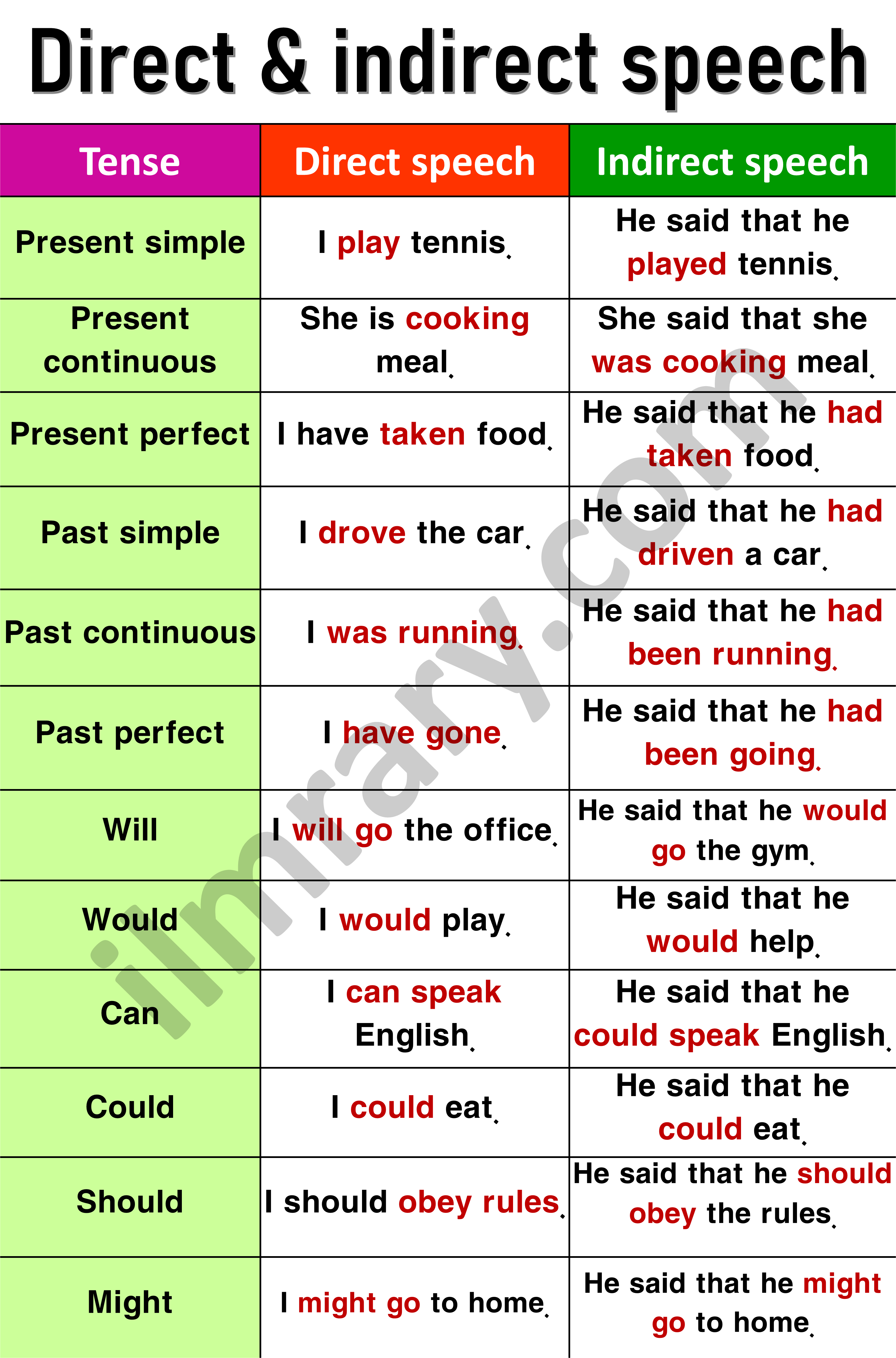
Direct and Indirect Speech of All English Tenses | Rules of Direct and Indirect


